
Call: 07971459152
 Send Inquiry
 Send Inquiry
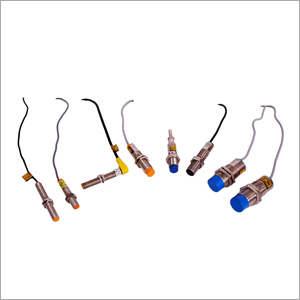
Fork Sensors
MOQ : 100 Pieces
Fork Sensors Specification
- Operating Temperature
- -20C to +60C
- Measurement Range
- 10 mm to 220 mm (fork width dependent)
- Cable Length
- 2 m standard
- Power Consumption
- <1.5 W
- Sensor Type
- Photoelectric Fork Sensor
- Mounting Type
- Through-hole or surface mount
- IP Rating
- IP67
- Interface
- M8 or M12 connector or pre-wired cable
- Application
- Label detection, edge detection, object counting, automation systems
- Signal Type
- Digital
- Sensitivity
- Adjustable sensitivity with potentiometer
- Response Time
- <0.5 ms
- Wireless
- No
- Features
- Immune to ambient light, compact design, robust brass housing
- Product Type
- Sensors
- Material
- Brass
- Input
- 10 to 30 V DC
- Output
- PNP/NPN, Normally Open or Normally Closed
- Function
- Detection of objects in fork gap
- Usage
- Metal Sensing
- Accuracy
- High precision detection
- Resolution
- 0.1 mm
- Voltage
- 10 to 30 V DC Volt (v)
- Weight
- 50-200 Grams (g)
- Hysteresis
- Low, for precise position detection
- Storage Temperature
- -40°C to +70°C
- Mechanical Protection
- Vibration and shock-resistant
- Indicator
- LED status indicator for output signal
- Enclosure Material
- Nickel-plated brass
- Light Source
- Infrared or red LED
- Switching Frequency
- Up to 10 kHz
Fork Sensors Trade Information
- Minimum Order Quantity
- 100 Pieces
- Supply Ability
- Piece
- Delivery Time
- 1 Week
- Main Domestic Market
- All India
About Fork Sensors
Leveraging on our years of experience, we are engaged in manufacturing, supplying and exporting a wide range of Fork Sensors. Our offered sensors are designed and developed by incorporating latest equipments and technology in order to attain complete customer satisfaction. To meet the international quality standards, these sensors are stringently checked on criterion like high performance. Fork Sensors are extensively used for small parts detection, cap detection on bottles and positioning of a robot arm.
Striking features:
- High sensitivity
- Longer functional life
- Optimum performance
- Simple usage
Product details
|
Size |
M18, M30 |
|
Cable |
2 m |
|
Block Type |
C Type |
|
Voltage |
10 - 30 V DC |
|
Ambient Temperature |
-25 Deg C To 70 Deg C |
|
Max Load Current |
50 Amp |
|
Switching Frequency |
1.5 KHz |
High Precision Sensing for Challenging Applications
Designed for tasks like label detection and object counting, our photoelectric fork sensors provide rapid, accurate detection with adjustable sensitivity. Their immunity to ambient light ensures performance consistency, even in brightly lit environments. The robust brass housing and mechanical resilience mean they are suitable for harsh factory floors.
Reliable Operation and Easy Integration
With a voltage range of 10 to 30 V DC and low power consumption, these sensors offer flexible integration into automation systems. Their compact, vibration-resistant body, combined with IP67 protection, suits industrial use. Standard outputs, quick response times under 0.5 ms, and user-friendly mounting options ensure minimal downtime and fast deployment.
FAQs of Fork Sensors:
Q: How does a fork sensor detect objects within the fork gap?
A: The fork sensor emits a light beam from the infrared or red LED across the gap. When an object interrupts the beam, the sensor detects the obstruction with high precision (0.1 mm resolution) and triggers a digital output.Q: What are the key benefits of using these fork sensors in automation systems?
A: Major benefits include high-speed detection (up to 10 kHz), robust mechanical protection (vibration and shock resistance), immunity to ambient light, easy installation, and consistently accurate results for applications like label detection, edge sensing, and counting.Q: When should you choose a fork sensor with brass housing and IP67 rating?
A: Select sensors with brass housing and IP67 rating for environments that demand mechanical durability, resistance to dust/water, or exposure to vibrationsas commonly found in automated manufacturing or packaging lines.Q: Where can these fork sensors be installed for best performance?
A: These sensors can be mounted via through-hole or surface mounting near conveyor belts, labeling stations, or material edges. The compact housing and 2 m cable length provide installation flexibility and minimize space constraints.Q: What process adjustments can be made using the potentiometer on the sensor?
A: The potentiometer allows users to fine-tune the sensitivity, optimizing detection for various target sizes or colors. This capability ensures reliable operation across different application requirements.Q: How do the output options enhance sensor compatibility with industrial systems?
A: Offering PNP/NPN, normally open or closed configurations means these sensors can easily interface with various control systems, PLCs, or automation equipment found in industrial settings.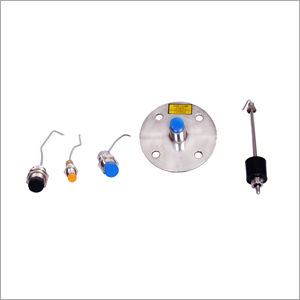
Tell us about your requirement

Price:
Quantity
Select Unit
- 50
- 100
- 200
- 250
- 500
- 1000+
Additional detail
Mobile number
Email

More Products in Industrial Sensors Category
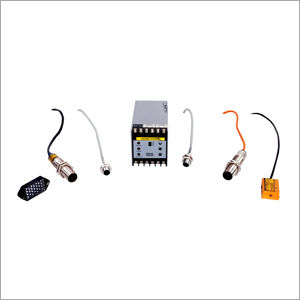
Electronic Sensors
Minimum Order Quantity : 100 Pieces
Voltage : 110220 Volt (v)
Product Type : Sensors
Accuracy : 99 %
Material : High Durability Plastic and Metal
Usage : Metal Sensing
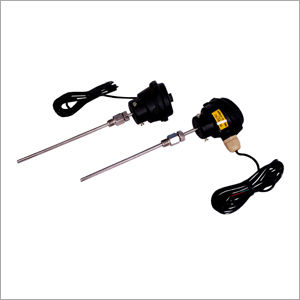
Proximity Sensors
Minimum Order Quantity : 100 Pieces
Voltage : 220 Volt (v)
Product Type : Sensors
Accuracy : 1 mm
Material : Stainless Steel
Usage : Metal Sensing
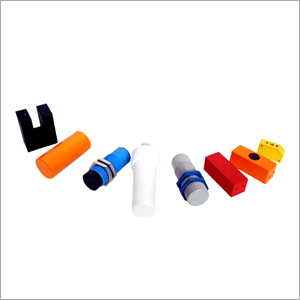
RTD Sensors
Minimum Order Quantity : 100 Pieces
Voltage : 110220 Volt (v)
Product Type : Sensors
Accuracy : 99 %
Material : Plastic
Usage : Temperature Measuring
Float Type Sensors
Minimum Order Quantity : 100 Pieces
Voltage : 1030VDC Volt (v)
Product Type : Sensors
Accuracy : 1% F.S.
Material : Metal
Usage : Position Sensing

Contact Details
AKSHAY SYSTEMS
GST : 27AHNPR5613G1Z2
- 1st Floor, Devidas Niwas, Saptashrungi Hsg. Soc., Rupeenagar, Talwade, Pune - 411062, Maharashtra, India
- Phone :07971459152
 Send Inquiry
Developed and Managed by Infocom Network Private Limited.
